Rhythm Dash
- 4.6
- Rating
- 1.00M
- Installs
- Free
- Price
 Analysis by App-foxy
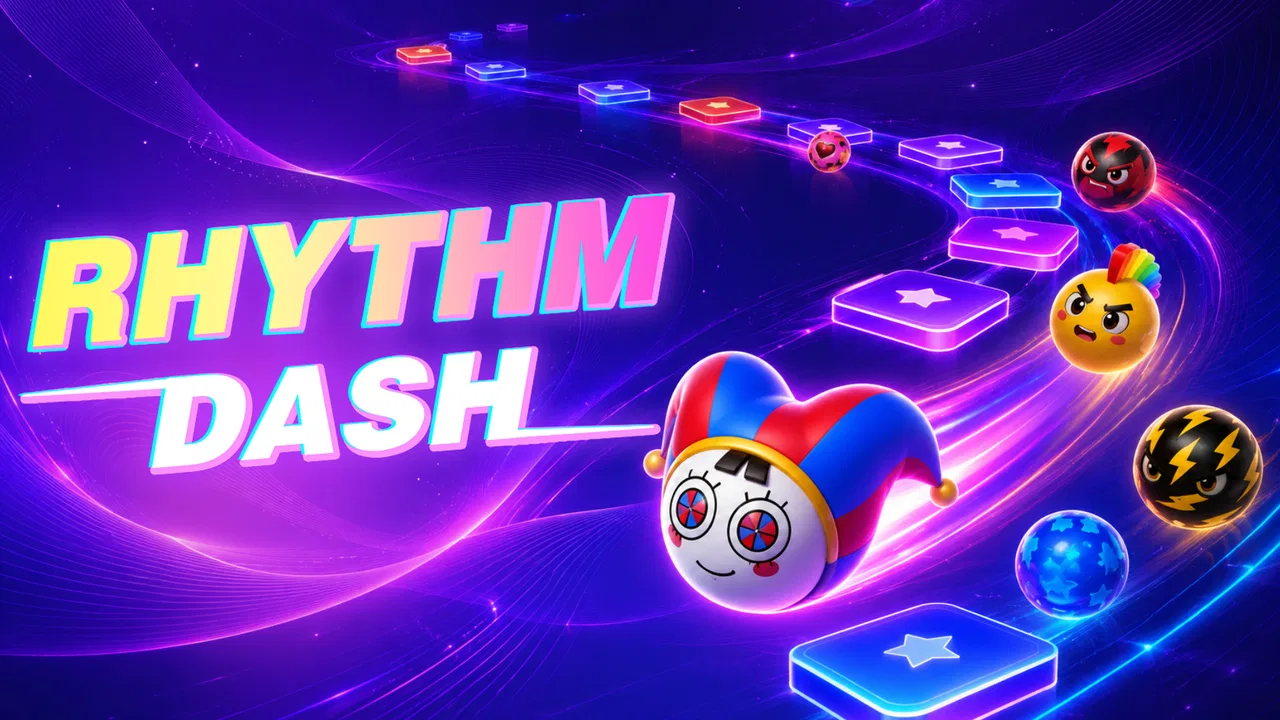
I spent time with Dancing Ballz Star as a music game built around timing, movement, and visual change. Its central idea is easy to understand: guide a jumping ball through rhythm-focused stages while the world shifts color around you. That simplicity makes it approachable, but it also means the quality of the experience depends heavily on how clearly you can read the action and how comfortably you can react to it.
Developed by MayaGameStudio, the game is free to start and sits in the music category. It has reached over 500 thousand installs and holds a 4.7 average from roughly 405 ratings, which suggests that its bright, quick-play format has found an audience. I would describe it as a casual rhythm challenge rather than a full music-learning tool or a deep arcade campaign. The appeal is in picking it up for a short session, following the beat, and trying to improve your control.
The game is rated Everyone, runs on Android 7.0 or later, and is currently at version 1.0.11. Optional purchases range from $3.99 to $19.99 per item. That combination makes it easy to try without an upfront payment, although anyone who dislikes in-app purchase prompts should approach it with the usual caution.
You May Also Like

 Blood Strike: 2.5 Anniversary
Blood Strike’s Loadouts Turn Every Drop Into a Tactical Gamble
A close look at Blood Strike’s custom loadouts: how fast access to signature weapons reshapes its battle royale rhythm, rewards preparation, and narrows the gap between fights.

 Pandora - Music & Podcasts
Pandora’s Music Is Easy to Start, but Harder to Recover
Pandora’s strength is its low-effort path from a seed to a station. Its weak spot is how much confidence it asks you to place in connection, setup, and quiet recovery.

 8 Ball Pool
 Is Built on Rivalries, Rematches, and Routine
A close look at the rivalries, rematches, shared routines, and unanswered safety questions that turn a quick pool match into a persistent mobile community.

 Samsung Music
’s Quiet Strength Is Playing What You Already Own
Its reach comes less from spectacle than from dependable access to a personal library. That simplicity is both the app’s strongest retention engine and its ceiling.

 AccuWeather: Weather Radar
AccuWeather Review: A Quick, Clear Forecast for Everyday Decisions
For everyday plans, the best forecast is the one you can understand quickly. AccuWeather makes rain timing, radar, and local conditions easy to act on, with a few trade-offs.

 Hill Climb Racing
Why Hill Climb Racing Still Turns Crashes Into One More Run
A tiny car, a bumpy hill and one more upgrade: Hill Climb Racing keeps resurfacing because its simple chaos makes every near-miss feel personal.
More From Our News Desk
View All News


How the game communicates its action
I find the game’s visual cues most useful when I treat them as a guide to attention, not a promise that every moment will be easy to read. Watching the ball’s route first can help me avoid being pulled toward background changes, while a steady playing position makes those cues easier to follow. That focus also reveals the next question: how the game’s rhythm and visuals work together during an actual attempt.
Readability and navigation during play
The strongest part of the design is its immediate visual language. A jumping ball, a path, and a changing environment give me a clear sense of what I am meant to follow. I do not need to study a complicated interface before beginning. For a player who prefers learning by doing, that is a real advantage, especially in a game intended for quick sessions.
The color-changing worlds also give the game personality. They make the stages feel more active than a plain track, and they help separate the experience from a basic tap-to-the-beat app. At the same time, visual energy can work both ways. When colors shift quickly or the background becomes busy, the important path may compete with decoration. I found that I played more confidently when I concentrated on the ball’s route rather than trying to take in every visual effect.
This is an important distinction for players with different visual preferences. Bright contrast and obvious movement can make the next action easier to notice, while rapid color changes may be tiring for someone sensitive to flashing or intense motion. Because the game’s identity is tied to those changing worlds, the visual style is not something I would treat as a minor detail. It is central to whether the game feels comfortable.
Navigation outside the action is less demanding than the gameplay itself. The concept is straightforward enough that a new player can understand the basic goal without a long explanation. That makes it suitable for someone who wants a direct arcade experience rather than menus full of systems, equipment, or story information. I would still recommend starting slowly and learning the timing before chasing better results, because rhythm games can feel confusing when the first attempt is treated as a test of reflexes.
One useful habit is to watch a short section before trying to move perfectly. I found that identifying the repeating visual pattern first helped me react with less panic. This is more effective than staring at the entire screen, because the game asks for attention to a moving route rather than broad visual scanning. Players who struggle with crowded scenes may benefit from focusing on one landmark at a time.
Motor demands and sensory comfort
The main physical demand is timing. The player needs to respond to the ball’s movement and keep actions aligned with the rhythm. That can feel satisfying for people who enjoy coordination challenges, but it may be frustrating for anyone with limited fine-motor control, slower reaction speed, hand tremors, or difficulty making repeated precise inputs.
This does not make the game unsuitable for every player with motor limitations. The control idea is simple, and a player can experiment with a relaxed grip, a stable surface, or shorter sessions. A phone held loosely in one hand may make repeated reactions less comfortable than placing it securely and using the hand that offers better control. The best setup will depend on the player, but the broader point is that posture and grip matter more here than they would in a passive music app.
The rhythm structure can also create pressure. Missing a beat is not just a visual mistake; it can break concentration and make the next action harder. I found that treating early attempts as practice reduced that pressure. Instead of trying to complete a section immediately, I watched for where my timing consistently slipped. That turns failure into information: sometimes I was reacting too early, while at other moments I was following the background instead of the ball.
For sensory-sensitive players, the combination of music, motion, and color deserves careful consideration. A person who enjoys lively audiovisual feedback may find it motivating, while someone who is affected by fast transitions may need to limit play time or avoid playing in a dark room. I would not recommend using it when you already feel visually tired, because a rhythm challenge becomes much less enjoyable when the screen is doing more work than your attention can comfortably handle.
Sound is naturally important in a music game, but I would not rely on audio alone. The visual route remains essential to understanding what is happening, so the game is not an ideal choice for someone who needs a fully audio-led experience. Conversely, if you cannot use sound in a particular situation, the visual timing may still offer some guidance, although the experience loses part of its intended character.
Where it fits into everyday life
The best use case I found was a short break when I wanted something more engaging than scrolling but did not have time for a long game. A few attempts can provide a compact challenge without requiring me to remember a complex story or manage a large collection of items. It works well as a quick mental reset, provided the player is comfortable with repeated attempts.
Imagine waiting for an appointment with a few minutes to spare. This is the kind of game you can open, focus on a rhythm section, and stop without losing the thread of a larger adventure. The same quality makes it useful for casual play at home, especially for someone who likes colorful arcade experiences but does not want to commit to a lengthy session.
There are limits to that convenience. Rhythm gameplay needs concentration, so it is not something I would play while walking, crossing a street, or handling another task. It also may not suit a noisy public place if the player depends on the music to maintain timing. In a quiet environment, the game feels more coherent; in a busy setting, visual attention and sound can both become unreliable.
For family use, the Everyone rating makes the game broadly approachable from an age-content standpoint. That does not mean every child will find the timing easy. Younger players may understand the colorful presentation quickly but become frustrated if they expect immediate success. I would frame it as a practice game rather than a competition, particularly for players who are still developing hand-eye coordination.
It can also work for friends comparing their own progress informally, but I would not choose it when the main goal is shared, simultaneous play. Its appeal is personal timing and repetition rather than conversation or cooperative planning. If your ideal music game is something everyone can enjoy together on one screen, a different format may be a better match.
What makes it different from familiar alternatives
Compared with a traditional music player, this is much more interactive: I am not simply listening, I am trying to translate the rhythm into movement. Compared with a music-learning app, however, it is less useful for building a structured understanding of notes, scales, or instrument technique. Its purpose is reaction and entertainment, not formal instruction.
It also differs from large rhythm games that surround songs with extensive menus, character systems, or unlockable collections. Dancing Ballz Star feels more focused on the immediate act of following the jumping ball through a changing world. That focus is a strength for players who want less setup. The trade-off is that people looking for deep progression, a broad musical library, or long-term customization may find the experience comparatively narrow.
Another useful comparison is with conventional platform games. The jumping motion may look familiar, but the musical timing changes how I approach each section. I am not only asking where the ball should go; I am trying to anticipate the beat and keep my actions consistent. That makes the game appealing to players who enjoy rhythm but do not want the lane-based format found in many music titles.
The colored presentation may also attract players who like visual novelty. Still, the color changes should not be confused with a substitute for strong gameplay variety. The core challenge remains timing the ball, so anyone who quickly tires of repeating a familiar action may prefer a game with more distinct mechanics. The right choice depends on whether refinement of one skill feels rewarding or repetitive to you.
Small strategies that improve the experience
My first practical tip is to separate visual learning from performance. On an early attempt, I would pay attention to the route and the rhythm instead of trying to achieve a perfect run. This reveals where the stage asks for a change in timing. Once I understood the pattern, later attempts felt less like guessing and more like controlled practice.
Second, keep sessions short when mistakes begin to feel automatic. In a rhythm game, frustration can make a player rush, and rushing creates more missed inputs. A brief pause can be more useful than repeating the same section with growing tension. This is especially relevant for players with motor fatigue or sensory overload, because the game rewards attention that is steady rather than forced.
Third, adjust the environment before blaming your ability. Glare on the screen, an unstable grip, background noise, or distracting movement nearby can all make a timing game harder. Playing with the phone supported and the display at a comfortable angle gave me a better chance to read the path. These are simple changes, but they matter because the game leaves little room for delayed reactions.
A fourth trade-off concerns purchases. Since the game is free, I can test whether its rhythm and visual style suit me before spending anything. The available items cost between $3.99 and $19.99 each, so I would treat purchases as optional rather than part of the basic decision to install. If prompts interrupt your concentration or you prefer a single upfront payment, that model may be a reason to choose another rhythm game.
Remaining barriers for different players
The biggest barrier is the lack of a forgiving feeling during difficult timing sections. A player who needs slower pacing, larger visual targets, or more time to react may find the core challenge demanding. I would not select this as a first recommendation for someone specifically looking for adjustable accessibility options. Its straightforward controls help, but simple controls are not the same as flexible controls.
Visual intensity is another consideration. The changing worlds are part of the attraction, yet they may create discomfort for people who are sensitive to fast motion, strong color transitions, or busy backgrounds. Anyone with that concern should approach cautiously and stop if the screen causes strain. The game’s visual identity means that players seeking a calm, low-stimulation experience will probably be happier elsewhere.
There is also a social and situational barrier: the game demands focused attention. It is not a good companion for multitasking, noisy travel, or moments when you need to remain aware of your surroundings. Even though a session can be short, short does not mean effortless. The player still needs a safe, stable setting and enough concentration to follow the rhythm.
Device age may matter as well. The game supports Android versions from 7.0 onward, which keeps it available to a broad range of devices, but the experience will still depend on how comfortably the particular phone displays motion and responds to input. I would avoid judging the game after playing with a dirty screen, heavy glare, or an unreliable touch response, since those problems can feel like gameplay difficulty.
Who should try it, and who should skip it
I would recommend it to someone who likes colorful arcade games, enjoys repeating a challenge to improve timing, and wants a free music-themed game that can fit into short breaks. It is especially appealing if you prefer a clear central mechanic over extensive menus and complicated progression. The high average rating and large install base also show that the basic concept has connected with many players, though personal comfort with rhythm timing remains the deciding factor.
I would suggest skipping it if you want a relaxed game with little precision, a formal tool for learning music, or a rich multiplayer experience. I would also be cautious if rapid visual changes are uncomfortable, if repeated timing inputs are difficult, or if you strongly prefer games without optional purchases. In those cases, a slower puzzle game, an educational music app, or a paid rhythm title with more control settings may serve you better.
For parents and caregivers, the Everyone rating makes the content broadly suitable, but the play style still deserves a look. A child who enjoys practice and colorful feedback may have fun, while a child who becomes upset by repeated misses may need encouragement and limits. The useful question is not only whether the content is age-appropriate, but whether the timing challenge matches the player’s patience and coordination.
For older players or anyone returning to mobile games, the clear premise is welcoming. I would begin with the sound at a comfortable level, use a stable grip, and judge the game after several calm attempts rather than one rushed session. The experience rewards familiarity, so an initially awkward response does not necessarily mean it is a poor fit.
My inclusive verdict
Dancing Ballz Star succeeds when its bright presentation supports the rhythm instead of competing with it. I enjoyed the directness of guiding a jumping ball through changing environments, and I found the short-session format easy to fit into ordinary moments. It feels more focused than a feature-heavy rhythm game and more active than simply listening to music.
Its inclusiveness is more practical than comprehensive. The simple concept lowers the learning barrier, the Everyone rating makes the content broadly approachable, and the game can be enjoyed in brief sessions. However, the core timing demand, visual motion, and need for sustained attention may exclude players who require slower pacing, reduced stimulation, or more adaptable controls.
My final advice is to try it when you want a colorful coordination challenge, not when you want a calm background activity. Give yourself time to learn the rhythm, play in a comfortable setting, and keep purchases optional until you know the game suits you. With those expectations, MayaGameStudio’s music game is an enjoyable pick for casual players who like improving through repetition. It is not universally comfortable, but for the right player, its focused design makes every successful run feel earned.
FAQs for Rhythm Dash
01What is Dancing Ballz Star and how does it work?
Dancing Ballz Star is a rhythm-based game where players guide a ball through a series of tracks by tapping on the screen to the beat of the music. The goal is to keep the ball on the path while syncing with the rhythm, which requires focus and timing. As players progress, the tracks become more challenging, offering a fun and engaging experience.
02What are the key features of Dancing Ballz Star?
Dancing Ballz Star offers a variety of features, including a wide range of music tracks, visually stunning 3D graphics, and intuitive one-touch controls. It also includes various levels of difficulty, allowing both beginners and experienced players to enjoy the game. Regular updates provide new songs and challenges to keep the gameplay fresh and exciting.
03Is Dancing Ballz Star suitable for all ages?
Yes, Dancing Ballz Star is designed to be accessible and enjoyable for players of all ages. Its simple controls and colorful graphics make it appealing to younger audiences, while the increasing difficulty levels offer a challenge for older players. However, it is important for parents to supervise young children during gameplay to ensure a positive experience.
04Does Dancing Ballz Star require an internet connection to play?
Dancing Ballz Star can be played offline, allowing users to enjoy the game without an internet connection. However, certain features, such as downloading new songs or accessing leaderboards, may require an internet connection. It's advisable to connect to Wi-Fi when downloading updates or additional content to avoid data charges.
05Are there any in-app purchases in Dancing Ballz Star?
Yes, Dancing Ballz Star includes in-app purchases that allow players to unlock additional songs, remove ads, or gain other enhancements. These purchases are optional and not required to enjoy the main game. Users should be aware of these options, especially if children are playing, to prevent unintended purchases.
Pros
- Engaging rhythm-based gameplay.
- Visually appealing graphics.
- Simple
- intuitive controls.
- Wide variety of music tracks.
- Regular updates with new levels.
Cons
- Requires internet for some features.
- Ads can be intrusive.
- Limited free levels.
- Occasional lag on older devices.
- In-app purchases needed for extras.

Rhythm Dash
Gallery